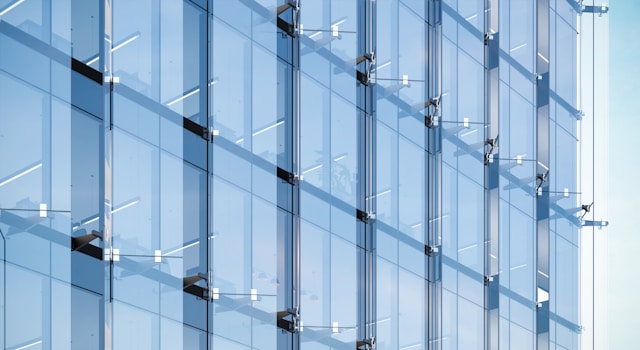
Minggu lalu saya survey proyek gedung perkantoran 18 lantai di Surabaya. Owner-nya komplain: “Rio, kenapa harga curtain wall dari kontraktor A Rp 3 juta per m², tapi kontraktor B cuma Rp 1,8 juta? Kelihatannya sama-sama kaca dan aluminium, kok bisa beda jauh?” Pertanyaan ini sebenarnya sangat umum, dan jawabannya ada di detail komponen yang tidak terlihat mata.
Curtain wall itu seperti mobil—dari luar terlihat mirip, tapi yang menentukan kualitas dan harga adalah komponen di dalamnya: mesin, suspensi, material interior. Begitu juga curtain wall: yang Anda bayar bukan cuma kaca dan frame yang terlihat, tapi puluhan komponen teknis yang bekerja bersama untuk memastikan bangunan tidak bocor, tidak panas, dan aman dari beban angin.
Sebenarnya agak susah menjelaskan komponen curtain wall tanpa lihat sampel fisik atau shop drawing detail, tapi saya coba jelaskan dengan gambar dan breakdown sistematis. Artikel ini melanjutkan pembahasan kita tentang facade engineering sebelumnya—kali ini kita masuk ke detail komponen dan fungsinya masing-masing.
Mengapa Perlu Memahami Komponen Curtain Wall?
Sebelum kita masuk ke detail teknis, penting untuk tahu kenapa pemahaman ini berguna untuk Anda sebagai owner atau project manager:
1. Impact terhadap Biaya
Perbedaan harga 40-50% antara penawaran biasanya bukan karena margin profit, tapi karena spesifikasi komponen yang berbeda. Mullion dengan wall thickness 3mm vs 2mm bisa beda harga 15-20%. Structural sealant dari brand ternama vs generic bisa beda 30%. Kalau Anda tidak paham komponennya, susah untuk apple-to-apple comparison.
2. Performance Bangunan
Thermal break yang proper bisa mengurangi beban AC sampai 25-30%. Drainage system yang bagus mencegah kebocoran yang bisa menghabiskan jutaan untuk perbaikan. Ini semua ditentukan oleh komponen yang tepat, bukan hanya “pakai curtain wall”.
3. Maintenance Jangka Panjang
Komponen berkualitas rendah mungkin bertahan 5-7 tahun. Komponen berkualitas tinggi bisa 20-25 tahun. Saving di awal bisa jadi mahal di tahun ke-10 kalau harus re-seal atau ganti panel karena failure.
Komponen Struktural: Tulang Punggung Sistem
Mullion & Transom (Frame System)
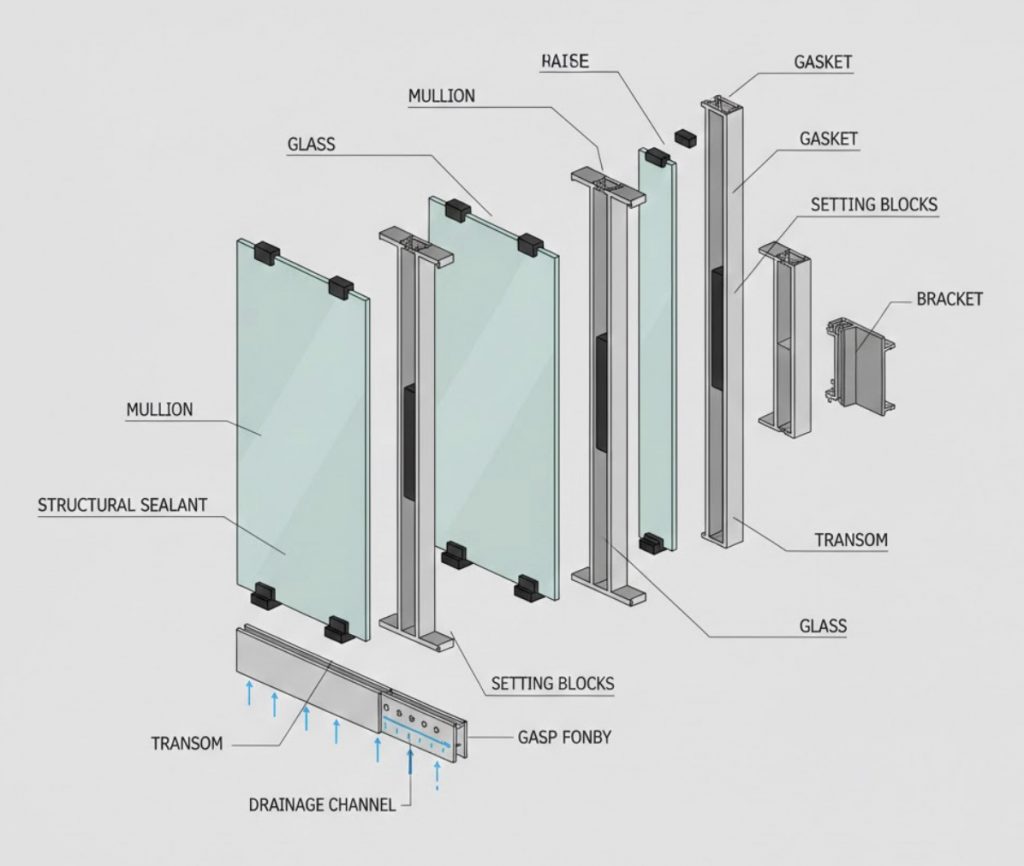
Ini adalah “tulang punggung” curtain wall—frame yang menahan semua beban dan menjaga panel tetap pada posisinya.
Mullion adalah frame vertikal, biasanya membentang dari slab ke slab (per lantai). Transom adalah frame horizontal yang membagi panel secara horizontal. Keduanya terbuat dari aluminum alloy, paling umum 6063-T5 atau kadang 6061-T6 untuk aplikasi yang butuh strength lebih tinggi.
Kenapa Pakai Aluminium?
- Lightweight: 1/3 berat baja—penting untuk high-rise karena mengurangi beban struktur
- Corrosion resistant: cocok untuk iklim tropis Indonesia dengan humidity tinggi
- Extrusion flexibility: bisa dibuat profile custom sesuai kebutuhan desain
- Recyclable: aspek sustainability
Tipe Profile
Ada beberapa bentuk profile mullion yang umum:
- Box Profile – rectangular hollow section, paling umum, balanced antara strength dan cost
- I-Beam Profile – untuk span panjang atau beban tinggi, lebih kaku terhadap deflection
- Custom Extrusion – untuk desain khusus, biasanya untuk feature area atau unique aesthetic requirement
Yang perlu diperhatikan dari profile ini:
Wall Thickness: Minimum 2.5mm untuk aplikasi standar, 3mm untuk high-rise atau high wind load area. Jangan terima wall thickness di bawah 2mm—ini akan bermasalah untuk long-term deflection dan strength.
Depth & Width: Ditentukan dari perhitungan deflection berdasarkan beban angin (SNI 1727:2020). Untuk gedung 10-20 lantai di kota besar Indonesia, typical mullion depth 150-180mm. Untuk super high-rise bisa sampai 250mm atau lebih.
Thermal Break Integration
Ini komponen yang sangat penting tapi sering diabaikan: thermal break adalah strip polyamide (plastik kuat) yang dipasang di tengah profile aluminium, memutus jalur konduksi panas dari luar ke dalam.
Tanpa thermal break, aluminium (yang konduktor panas sangat baik) akan membawa panas matahari langsung ke dalam ruangan. Dengan thermal break width 20-34mm, heat transfer bisa dikurangi 40-50%. Ini berdampak langsung ke beban cooling HVAC.
Detail thermal break harus continuous—kalau terputus di corner joint atau connection point, thermal bridging tetap terjadi dan performance turun drastis.
Bracket & Anchor System
Bracket adalah komponen yang menghubungkan curtain wall ke struktur bangunan. Ini adalah transfer point untuk semua beban—dead load panel, wind load, seismic movement—jadi desain dan instalasinya harus sangat presisi.
Ada dua tipe bracket utama:
1. Dead Load Bracket
Menahan beban vertikal dari berat panel curtain wall. Biasanya satu per mullion per lantai, positioned di bagian bawah mullion. Design harus mempertimbangkan:
- Load capacity sesuai berat total panel
- Vertical adjustment untuk leveling (typical ±20mm)
- Rotation capability untuk accommodate building tolerance
2. Wind Load Bracket
Menahan beban lateral dari tekanan angin. Positioned di bagian atas mullion. Design harus allow:
- Horizontal movement untuk thermal expansion curtain wall
- Fixed di satu direction, sliding di direction lain
- Tidak menahan vertical load (supaya tidak clash dengan dead load bracket)
Material Bracket
Galvanized steel – paling umum, cost-effective, adequate untuk most application
Stainless steel (304 atau 316) – untuk coastal area dengan salt spray exposure, atau kalau owner specify higher durability standard. Lebih mahal 2-3x tapi tahan korosi lebih baik.
Adjustment Mechanism
Bracket yang bagus harus punya 3-axis adjustment:
- X-axis (in-out dari struktur): typical adjustment range ±30-50mm untuk accommodate struktur yang tidak perfectly plumb
- Y-axis (left-right horizontal): ±20mm untuk alignment horizontal
- Z-axis (vertical): ±20mm untuk leveling
Adjustment ini sangat penting karena struktur beton/baja tidak pernah 100% sesuai drawing. Bisa ada deviation 20-30mm secara horizontal atau vertical. Kalau bracket tidak bisa adjust, curtain wall tidak bisa terinstal properly.
Connection ke Struktur
Ada dua metode umum:
Embed Plate Method: Stainless steel plate di-embed ke beton saat casting. Bracket di-bolt ke embed plate. Ini method paling reliable tapi perlu koordinasi ketat dengan structural engineer sejak tahap fabrication formwork.
Post-Installed Anchor Method: Anchor (expansion anchor atau chemical anchor) diinstal setelah beton sudah casting. Lebih fleksibel tapi perlu careful installation dan testing. Typical pakai Hilti, Fischer, atau brand ternama lain dengan load rating yang certified.
Seismic Consideration
Indonesia zona gempa tinggi, jadi bracket harus designed sesuai SNI 1726:2019. Key requirement:
- Allow seismic drift antar lantai (story drift)
- Prevent glass breakage akibat frame distortion
- Maintain structural integrity saat terjadi gempa
Biasanya pakai slotted hole connection atau sliding joint yang allow movement ±25-40mm tergantung seismic zone dan building height.
Link ke workshop kami untuk fabrikasi bracket custom yang memenuhi semua requirement ini.
Subframe / Intermediate Support
Untuk panel sangat besar (misal 4m x 3m) atau multi-story curtain wall, kadang perlu intermediate support di tengah mullion supaya deflection tidak excessive. Subframe ini biasanya aluminum profile yang smaller size, positioned horizontal di mid-height mullion, dan di-support kembali ke struktur dengan additional bracket.
Subframe juga berguna untuk accommodate tolerance struktur—kalau ada slab yang tidak level, subframe bisa di-adjust independent tanpa affect mullion di atas atau bawah.
Komponen Glazing: Hati Sistem Curtain Wall
Glass Panel
Kaca adalah komponen paling visible dan paling critical dari curtain wall. Ada beberapa tipe kaca yang umum dipakai:
1. Float Glass
Kaca dasar yang di-produce dengan floating method. Sangat smooth surface, optical quality bagus. Tapi kekuatan mekanis terbatas, jadi untuk curtain wall hampir tidak pernah pakai float glass mentah—selalu di-process lebih lanjut.
2. Tempered Glass (Kaca Tempered)
Float glass yang di-heat treat sampai 650-700°C kemudian rapid cooling. Prosesnya menciptakan surface compression yang membuat kaca 4-5x lebih kuat dari float glass. Kalau pecah, akan jadi butiran kecil tumpul (safer). Setelah tempering, kaca tidak bisa dipotong atau dilubangi lagi.
Tempered glass biasanya jadi outer pane di IGU karena perlu strength tinggi untuk withstand wind pressure.
3. Laminated Glass
Dua atau lebih layer kaca yang di-bonding dengan PVB (Polyvinyl Butyral) interlayer. Kalau pecah, pecahan tetap menempel di PVB—tidak jatuh. Sangat penting untuk safety, especially di area pedestrian.
Laminated glass juga bisa provide acoustic insulation kalau pakai PVB khusus dengan acoustic damping property. Typical composition untuk curtain wall: 6mm + 1.52mm PVB + 6mm.
Harus comply dengan SNI 8148:2015 tentang cara uji kekuatan lentur kaca.
4. Heat-Strengthened Glass
Mirip tempered tapi heat treatment tidak se-intense. Kekuatan 2x float glass. Kalau pecah, pattern pecahan seperti float glass (large shards), bukan butiran kecil seperti tempered. Kadang dipakai untuk aplikasi yang perlu strength tapi tidak mau risk spontaneous breakage dari tempered glass.
5. Low-E Coated Glass
“Low-E” = Low Emissivity. Coating metallic oxide sangat tipis (nanometer scale) yang applied ke kaca surface. Fungsi: reflect infrared radiation (heat) tapi tetap allow visible light masuk.
Untuk iklim tropis Indonesia, Low-E coating positioned di surface #2 (inner surface outer pane IGU) supaya reflect solar heat sebelum masuk cavity. Bisa reduce solar heat gain 50-70% compared ke clear glass, sambil maintain 60-70% visible light transmittance.
Low-E coating sangat fragile—harus protected di dalam IGU cavity, tidak boleh exposed ke outside.
IGU (Insulated Glass Unit) Composition
IGU adalah standard untuk curtain wall modern. Typical composition dari luar ke dalam:
Outer Pane: 8mm or 10mm tempered glass (kadang dengan Low-E coating)
Spacer Bar: 12mm or 16mm aluminum spacer, berisi desiccant untuk absorb moisture
Cavity: Air (kadang Argon untuk better thermal insulation)
Inner Pane: 6mm laminated glass (6mm + 1.52 PVB + 6mm)
Total thickness typical: 8mm + 12mm + (6+1.52+6)mm = 33.52mm atau kadang ditulis sebagai “8-12-6.6 Lami”
Kenapa Pakai Argon di Cavity?
Argon gas lebih dense daripada air, thermal conductivity lebih rendah. Filling cavity dengan Argon bisa improve U-value sekitar 10-15%. Tapi Argon bisa leak slowly over time (typical 1% per tahun), jadi perlu secondary seal yang excellent quality.
Spacer Bar
Spacer adalah frame yang memisahkan dua layer kaca di IGU. Material paling umum:
Aluminum Spacer: Traditional, cost-effective, tapi aluminum adalah conductor panas yang bagus—bisa create thermal bridge di edge kaca. Biasanya di-fill dengan molecular sieve desiccant untuk absorb moisture yang trapped di cavity saat manufacturing.
Warm-Edge Spacer: Material composite atau stainless steel dengan thermal break. Reduce edge heat loss 10-20% dibanding aluminum spacer. Lebih mahal tapi recommended untuk green building requirement.
Spacer di-seal dengan dual seal system:
- Primary Seal: Polyisobutylene (PIB) – flexible, prevent moisture penetration
- Secondary Seal: Polysulfide, silicone, atau polyurethane – structural strength, bonding kaca ke spacer
Kedua seal ini harus compatible dan applied dengan proper thickness. Kalau seal failure, moisture masuk ke cavity → kondensasi di dalam IGU → permanent fog yang tidak bisa dibersihkan. Ini adalah defect paling umum di IGU yang manufacturing process-nya tidak bagus.
Setting Block & Edge Clearance
Setting block adalah small piece (typically 100mm x 25mm x 5mm) yang positioned di bawah kaca untuk distribute beban kaca ke frame. Material EPDM rubber atau silicone—harus incompressible tapi tidak terlalu hard sampai stress kaca.
Position setting block sangat penting: harus di 1/4 point dari edge (quarter point positioning). Kalau positioned di tengah, bisa create stress concentration saat ada wind load atau thermal expansion.
Edge clearance antara kaca dan frame harus minimum:
- 5mm di semua sisi untuk kaca up to 2m²
- 8mm untuk kaca larger atau high wind load application
Clearance ini accommodate:
- Thermal expansion kaca (bisa 0.8-1mm per meter saat suhu naik 40-50°C)
- Building movement
- Installation tolerance
Kalau clearance tidak cukup, kaca bisa “bite” frame → stress → crack.
Komponen Sealing & Weather Protection
Structural Sealant (untuk Structural Glazing System)
Structural silicone glazing (SSG) adalah system dimana kaca di-bond ke frame aluminum hanya dengan structural sealant—tidak ada mechanical fixing seperti pressure plate atau gasket yang visible dari luar. Hasilnya adalah tampilan full glass, very clean aesthetic.
Structural sealant harus 2-component silicone dengan specific properties:
- Tensile strength minimum 1.0 MPa (biasanya 1.2-1.5 MPa)
- Elongation minimum 200% untuk accommodate movement
- Adhesion excellent ke aluminum dan glass
- Durability 20-25 tahun under UV exposure dan weathering
Bite Dimension Calculation
“Bite” adalah width sealant yang bonding kaca ke frame. Calculation berdasarkan:
- Wind load (SNI 1727)
- Glass weight
- Thermal movement
- Safety factor (typical 6 untuk structural application)
Typical bite dimension:
- Width: 10-12mm (contact area dengan glass)
- Depth: 6-8mm (thickness sealant)
Formula dasar (simplified): Bite width (mm) = Wind Pressure (kPa) × Glass Area (m²) / Perimeter (m) / Sealant Allowable Stress (kPa) × Safety Factor
Kalau bite kurang dari calculation, risk sealant failure dan kaca jatuh—very dangerous. Ini kenapa structural sealant harus di-design dan di-install oleh professional.
Sealant specification biasanya refer ke ASTM C1401 (standar internasional untuk structural sealant specification). ASTM adalah American Society for Testing and Materials—standar internasional yang diadopsi industri global karena SNI belum menetapkan standar detail untuk structural sealant curtain wall.
Compatibility Testing
Sebelum production, wajib test compatibility antara sealant, glass coating, aluminum finish, dan cleaner yang akan dipakai. Incompatible materials bisa cause:
- Adhesion failure
- Discoloration
- Sealant degradation
Test method: sample sealant di-cure dengan semua material yang akan contact, kemudian di-expose ke UV dan thermal cycling, lalu di-test adhesion dan elongation. Test duration typical 21 days.
Weather Sealant
Selain structural sealant, ada weather sealant untuk seal joint antara panel, antara frame dan kaca (kalau bukan SSG system), dan antara curtain wall dengan struktur.
Weather sealant bisa 1-component (easier application) atau 2-component. Material:
- Silicone – excellent UV resistance, durability 20-25 tahun, bagus untuk joint yang perlu movement capability ±25%
- Polyurethane – good adhesion, bisa di-paint, tapi durability lebih rendah dari silicone (10-15 tahun)
Untuk iklim tropis Indonesia dengan UV exposure tinggi, saya recommend silicone untuk semua external joint.
Color matching penting untuk aesthetic—sealant brand ternama (Dow Corning, Sika, 3M) biasanya provide banyak pilihan warna yang bisa match dengan aluminum frame finish.
Gasket System
Gasket adalah rubber seal yang create pressure barrier dan weather seal. Material typical EPDM (Ethylene Propylene Diene Monomer) atau neoprene rubber.
Gasket di curtain wall ada beberapa tipe:
1. Zipper Gasket / Wedge Gasket
Inserted ke groove di mullion/transom untuk seal perimeter kaca. Profile berbentuk wedge—when pressed, create compression seal.
2. Structural Gasket
Untuk sistem captured frame (bukan SSG). Gasket ini partially visible dari luar, create black line di perimeter kaca.
3. Setting Gasket
Di-install di setting block area untuk prevent direct contact glass-to-aluminum yang bisa cause scratching atau point load concentration.
Properties yang penting untuk gasket:
- Compression Set Resistance – kemampuan maintain sealing force setelah compressed bertahun-tahun. Good quality gasket maksimum 30% compression set after 70°C, 168 hours test.
- UV & Ozone Resistance – EPDM excellent untuk ini, bisa bertahan 20+ tahun outdoor exposure
- Temperature Range – harus maintain flexibility di -30°C sampai +80°C (range suhu ekstrim yang possible)
Drainage System
Ini adalah komponen yang sangat penting tapi sering tidak visible dan kadang di-overlook: sistem drainage untuk evacuate air yang infiltrate ke dalam curtain wall system.
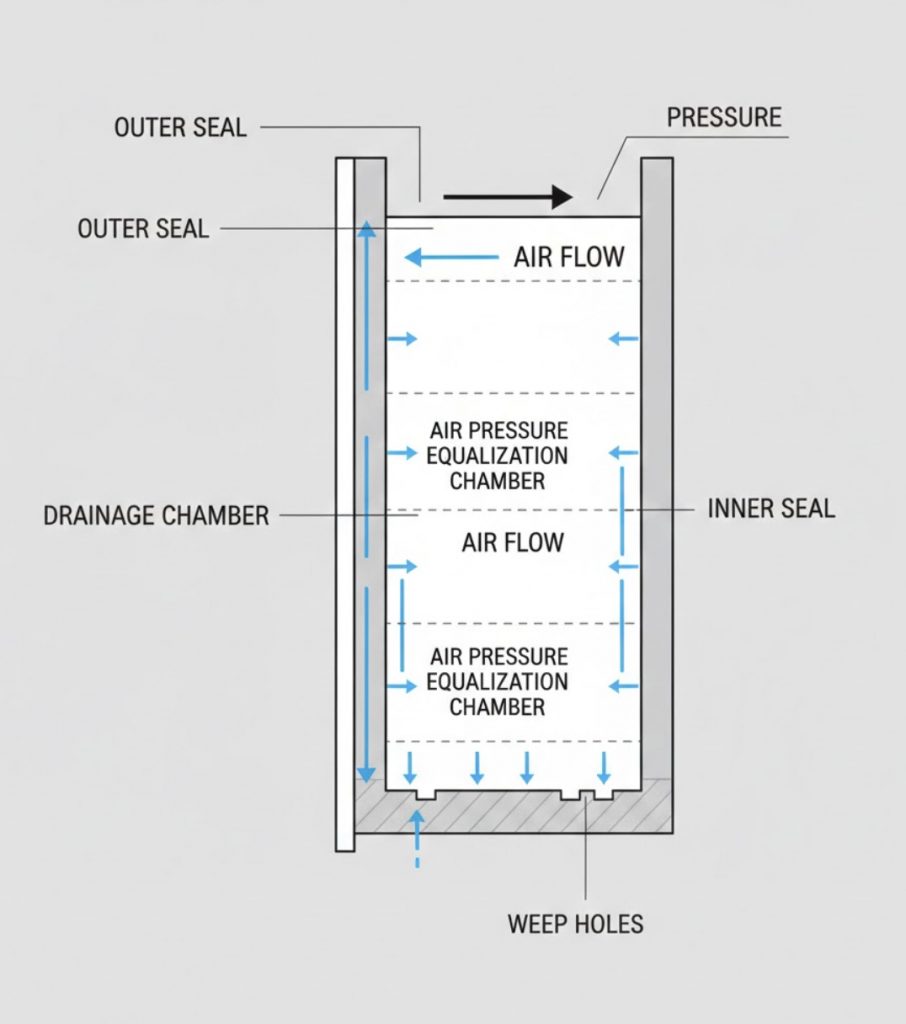
Prinsip modern curtain wall adalah rainscreen principle atau pressure equalized design:
- Outer seal (weather seal) adalah first barrier tapi tidak waterproof 100%—akan ada air yang masuk karena wind-driven rain
- Air yang masuk akan collected di drainage chamber di dalam frame
- Weep holes (lubang kecil di bottom transom) allow air untuk keluar
- Air pressure equalization mencegah air ter-push masuk ke inner seal
Design drainage yang buruk adalah penyebab #1 kebocoran curtain wall di Indonesia. Common mistakes:
- Weep hole di-block oleh sealant atau debris
- Drainage path tidak continuous (terputus di corner atau joint)
- Insufficient drainage slope di horizontal mullion
- Back dam tidak properly positioned
Komponen Thermal & Acoustic
Thermal Break
Saya sudah singgung thermal break di bagian mullion, tapi ini perlu dijelaskan lebih detail karena sangat crucial untuk performance.
Material thermal break typical: Polyamide 66 (PA66) reinforced dengan glass fiber 25%. Kenapa material ini?
- Thermal conductivity rendah: 0.25-0.30 W/mK (aluminum 160 W/mK – jadi 500x lebih rendah!)
- Mechanical strength adequate untuk structural load
- Temperature resistance -40°C to +100°C
- Dimensional stability (tidak creep atau deform under load)
Width thermal break typical:
- 20-24mm untuk standard application
- 28-34mm untuk green building requirement atau iklim ekstrim
- 40mm+ untuk passive house standard
Impact thermal break terhadap U-value frame:
- Frame tanpa thermal break: U = 5.5-6.5 W/m²K
- Frame dengan thermal break 24mm: U = 2.5-3.0 W/m²K
- Frame dengan thermal break 34mm: U = 1.8-2.2 W/m²K
Insulation (untuk Spandrel Panel)
Spandrel adalah area curtain wall yang opaque—biasanya di depan slab edge atau area MEP shaft. Panel spandrel perlu insulation di belakang panel untuk prevent thermal bridging dan kondensasi.
Material insulation typical:
- Mineral Wool – fire resistant (non-combustible), density 60-80 kg/m³, R-value bagus
- Polyisocyanurate (PIR) board – R-value sangat tinggi per inch thickness, tapi combustible jadi perlu proper fire barrier
Thickness insulation ditentukan dari thermal calculation target U-value. Untuk green building Indonesia (Greenship rating), typical minimum R-2.5 to R-3.5 (equivalent 50-75mm mineral wool).
Fire rating juga consideration penting. Kalau building require fire-rated curtain wall (misal 1-hour or 2-hour fire rating), insulation harus non-combustible dan ada intumescent seal di perimeter spandrel panel.
Acoustic Laminated Glass
Untuk building di area noise tinggi (next to highway, airport, atau entertainment district), atau untuk building yang butuh acoustic privacy (hotel, hospital, residential), perlu specify acoustic laminated glass.
Bedanya dengan laminated biasa: PVB interlayer yang specialized untuk acoustic damping. Thickness PVB lebih tebal (typically 0.76mm atau 1.52mm acoustic PVB) dan ada damping compound yang absorb sound energy.
Performance diukur dengan STC (Sound Transmission Class) rating:
- Standard IGU dengan laminated glass biasa: STC 30-35
- IGU dengan acoustic laminated glass: STC 38-42
- High-performance acoustic curtain wall: STC 45-50
Makin tinggi STC, makin bagus sound isolation. Rule of thumb:
- STC 35 – normal conversation bisa sedikit terdengar
- STC 40 – loud speech muted sampai level tidak mengganggu
- STC 45+ – most sound blocked effectively
Untuk achieve STC tinggi, tidak cukup hanya glass—harus combination:
- Asymmetric IGU composition (misal 10mm + 16mm cavity + 8.8 lami, bukan 8mm + 12mm + 8mm) untuk break sound wave resonance
- Larger air cavity (16-20mm better daripada 12mm)
- Good perimeter seal untuk prevent flanking sound
- Proper gasket compression
Coordinate dengan konsultan MEP dan acoustical untuk achieve target performance.
Komponen Aksesori & Finishing
Snap-on Cover / Cap
Setelah mullion dan transom terinstal, biasanya ada snap-on cover untuk hide fixing screw dan create clean aesthetic finish. Cover ini extruded aluminum dengan profile yang snap ke groove di mullion/transom.
Surface finish snap-on cover harus match dengan mullion finish. Options:
- Anodized – tahan lama, color consistent, tapi pilihan warna terbatas (silver, bronze, black paling umum)
- Powder Coating – banyak pilihan warna, cost-effective, durability 10-15 tahun
- PVDF (Kynar) – premium finish, excellent UV and weather resistance, durability 20-25 tahun, wide color selection
Untuk project high-end atau coastal area, saya recommend PVDF finish karena maintenance-free dan color tidak fade.
Fire Safing & Firestopping
Di setiap floor level, gap antara curtain wall dan slab edge harus di-seal dengan fire-rated material untuk prevent fire dan smoke spread vertikal.
Typical fire safing assembly:
- Mineral wool (density 100-120 kg/m³) untuk fill gap behind mullion
- Intumescent sealant atau fire barrier caulk di exposed face
- Assembly harus tested untuk achieve required fire rating (1-hour, 2-hour, etc.)
Building code Indonesia require fire safing comply dengan building fire rating requirement. Testing biasanya mengacu ke international standard seperti ASTM E2307 atau UL 2079 karena SNI test protocol untuk curtain wall fire rating masih limited.
Fire safing installation harus di-coordinate dengan:
- Structural slab location
- MEP penetration
- Interior partition dan ceiling
Common mistake: fire safing di-install setelah interior ceiling sudah closed—jadi tidak accessible untuk future maintenance atau modification. Plan sequence dengan baik.
Opening & Ventilation
Untuk naturally ventilated building atau untuk access panel maintenance, curtain wall perlu incorporate operable window atau louver.
Tipe opening common:
- Casement Window (top-hung atau side-hung)
- Awning Window (bottom-hung, bagus untuk rain protection)
- Sliding Window
- Tilt-and-Turn
- Fixed Louver untuk permanent ventilation tanpa operable sash
Hardware untuk operable window harus:
- Heavy-duty (karena panel biasanya large dan heavy)
- Corrosion resistant (stainless steel atau zinc-plated steel)
- Friction stay yang bisa hold panel open di angin
- Proper gasket seal saat closed
Brand hardware ternama: Siegenia, Roto, G-U (European), Doric, Hopo (Asian). Jangan compromise di hardware quality—ini adalah moving part yang akan di-operate berulang dan exposed ke weather.
Coordinate opening location dengan:
- Building ventilation strategy
- Fire escape and smoke vent requirement
- Façade cleaning and maintenance access
- MEP fresh air intake location
Internal Blind Integration
Modern office dan hotel building sering specify motorized blind system untuk solar control dan privacy. Blind system bisa:
- Between glass – di cavity IGU (tapi perlu IGU yang sangat tebal dan risk maintenance issue)
- Internal blind box – positioned di dalam ruangan, attached ke mullion
Kalau specify internal blind dengan motorized system, perlu coordinate sejak design stage:
- Mullion dimension harus accommodate blind box depth (typical 150-200mm projection ke dalam)
- Clearance untuk motor dan control wiring
- Access untuk maintenance blind dan motor
- Coordinate dengan interior ceiling height
Blind integration yang tidak di-plan dengan baik bisa:
- Clash dengan ceiling atau HVAC diffuser
- Block thermal break (create thermal bridge)
- Interfere dengan mullion structural capacity
- Difficulty untuk future replacement parts
| Komponen | Stick System | Unitized System | Structural Glazing (SSG) |
| Mullion Assembly | Site-assembled piece by piece | Factory pre-assembled dalam unit besar | Minimal visible frame, clean aesthetic |
| Glass Installation | Glazed on-site setelah frame erected | Pre-glazed di workshop, install sebagai complete unit | Bonded dengan structural sealant, no visible cap |
| Transom Type | Captured dengan pressure plate atau gasket | Integrated dalam unit, pre-sealed | SSG system, sealant exposed minimal |
| Quality Control | Di lapangan (weather-dependent, variability tinggi) | Di workshop (controlled environment, consistent quality) | Workshop QC + stringent sealant application protocol |
| Installation Speed | Slower, tergantung cuaca dan skill labor | 2-3x lebih cepat, tidak affected rain (dry-in cepat) | Medium, butuh curing time sealant |
| Weather Seal | Gasket + wet seal on-site | Pre-compressed gasket, factory applied | Full structural sealant system, dry seal |
| Suitable Height | Low-rise to mid-rise (up to 20 floors) | Mid-rise to super high-rise (20+ floors) | Any height, typically high-end project |
| Cost per m² | Paling rendah (baseline) | 15-25% lebih mahal dari stick | 25-40% lebih mahal dari stick |
| Maintenance Access | Gasket bisa di-replace dari luar | Gasket replacement sulit, butuh remove unit | Sealant re-seal every 15-20 tahun, complex |
Quality Control & Testing untuk Komponen
Sebelum komponen di-install atau di-accept, ada beberapa inspection dan testing yang harus dilakukan:
Material Certification
Setiap material harus punya certification yang membuktikan comply dengan specification:
Mill Certificate untuk Aluminum
Certificate dari aluminum mill yang stating alloy grade (6063-T5), chemical composition, mechanical properties (tensile strength, yield strength). Check bahwa sesuai spec—kadang supplier substitute dengan grade lebih rendah kalau tidak ada proper QC.
Glass Test Report
Untuk tempered glass, harus ada certificate testing sesuai SNI 8148:2015 (kekuatan lentur kaca). Batch testing—setiap production batch harus di-sample dan di-test.
Untuk IGU, harus ada test report untuk:
- U-value measurement
- Seal durability test (accelerated aging)
- Argon retention test (kalau specify argon fill)
Sealant Certification & Batch Testing
Structural sealant harus ada:
- Product datasheet dengan technical properties
- Batch certificate stating cure time, tensile strength, elongation
- Compatibility test report dengan materials yang akan contact
Dimensional Tolerance
Check dimensi komponen before installation:
Frame Squareness
Mullion dan transom harus square (90° corner) dalam tolerance ±1mm per meter. Kalau tidak square, panel tidak fit properly dan bisa create gap atau stress point.
Glass Size
Check glass dimensions vs shop drawing. Tolerance typical ±2mm untuk edge yang akan di-seal, ±1mm untuk edge yang visible. Kalau glass over-size, tidak masuk frame. Kalau under-size, edge clearance tidak cukup untuk movement.
Bracket Fixing Position
Survey posisi bracket setelah install, before mullion erected. Tolerance position ±10mm horizontal, ±5mm vertical. Kalau deviation lebih besar, mullion alignment akan susah dan stress tidak distribute properly.
Assembly Quality
Corner Joint Welding/Crimping
Untuk mullion dengan mechanical joint (tidak extruded continuous), check corner joint quality. Welding harus full penetration tanpa porosity. Crimping harus uniform pressure tanpa gap.
Testing method: visual inspection + pull test sample joint (destructive test di workshop sebelum production).
Thermal Break Continuity
Check bahwa thermal break tidak terputus di corner joint, splice connection, atau bracket penetration. Infrared camera bisa detect thermal bridging—kalau ada hot spot, ada masalah.
Gasket Seating
Gasket harus seated properly di groove—tidak twisted, tidak over-compressed, dan tidak ada gap. Visual inspection setiap joint.
Surface Finish Quality
Anodizing Thickness
Minimum requirement:
- AA10: 10 micron minimum (for interior or light-duty outdoor)
- AA15: 15 micron minimum (for moderate outdoor exposure)
- AA20: 20 micron minimum (for severe outdoor, coastal, atau industrial environment)
Test method: Eddy current thickness gauge (non-destructive), sample per batch.
Powder Coating Thickness
Minimum 60 micron, typical 80-100 micron for outdoor. Test dengan magnetic thickness gauge.
PVDF Coating
Minimum 25 micron per coat, typically 2-coat system (total 50-55 micron) atau 3-coat system (70-80 micron). Premium spec require 3-coat.
Test adhesion: Cross-hatch test (ASTM D3359) – tape test untuk check coating tidak delaminate.
Mock-up Performance Testing
Sebelum full production, mock-up (full-scale prototype) harus di-test untuk performance. Testing protocol refer ke:
ASTM E1105 – Water penetration and air infiltration test
ASTM E330 – Structural performance under uniform static air pressure
AAMA 501.6 – Test methods untuk aluminum curtain wall
Test procedure:
- Static Air Pressure Test – apply 150% design wind pressure, measure deflection (harus <L/175 untuk mullion)
- Air Infiltration Test – measure air leakage rate pada pressure differential (typical 75 Pa). Acceptance: <0.06 CFM/ft² untuk fixed curtain wall
- Water Penetration Test – spray air sambil apply wind pressure simulation. Run minimum 15 minutes. No water penetration allowed ke interior side.
- Dynamic Wind Test (optional untuk super high-rise) – cyclic pressure untuk simulate fatigue
Kalau mock-up failure di testing, perlu investigate root cause, modify design atau component specification, kemudian re-test. Jangan skip mock-up testing untuk cost saving—ini adalah insurance bahwa system akan perform sesuai harapan.
Tips Praktis: Memilih Komponen Berkualitas
1. Jangan Hanya Fokus Harga
Saya sering lihat owner yang pilih penawaran paling murah, kemudian 5 tahun later complain kebocoran atau kaca pecah. Komponen murah biasanya:
- Aluminum wall thickness di-reduce (2mm instead 2.5-3mm)
- Thermal break absent atau under-spec (15mm instead 24mm)
- Generic sealant tanpa testing certification
- Hardware yang cepat rusak
Life-cycle cost untuk curtain wall harus di-calculate 20-25 tahun, bukan hanya first cost. Saving 20% di awal bisa jadi 200% mahal kalau factor in:
- Re-seal cost every 5-7 tahun (instead 15-20 tahun)
- Higher HVAC operational cost karena poor thermal performance
- Water damage repair cost
- Glass replacement cost dari failure
2. Pastikan Material Sesuai Iklim Indonesia
Indonesia iklim tropis dengan characteristics:
- High UV exposure – perlu coating dan sealant dengan UV resistance excellent
- High humidity – perlu proper drainage dan IGU seal quality tinggi untuk prevent kondensasi
- Heavy rain dengan wind – perlu drainage capacity adequate dan weather seal yang maintain integrity
- Coastal area: salt spray – perlu stainless steel bracket atau galvanize dengan thick coating
Beberapa consultant atau supplier dari temperate climate kadang spec material yang tidak suitable untuk tropis, misalnya:
- Sealant yang optimize untuk freeze-thaw cycle tapi poor UV resistance
- Gasket yang harden quickly di high temperature
- Coating yang fade fast under tropical sun
Pastikan semua component tested atau proven track record di tropical climate similar dengan Indonesia.
3. Request Shop Drawing Detail
Sebelum accept penawaran atau approve production, minta shop drawing detail yang showing:
- Mullion profile section dengan wall thickness labeled
- Thermal break width dan material spec
- Glass composition dengan brand dan specification
- Sealant dan gasket brand dengan properties
- Bracket design dengan material dan coating spec
- Connection detail ke struktur
Review shop drawing dengan engineer atau independent façade consultant kalau Anda tidak familiar. Checking points:
- Mullion depth adequate untuk span? (bisa quick check dengan deflection formula)
- Thermal break continuous atau terputus di joint?
- Edge clearance kaca minimum 5-8mm?
- Bracket adjustment range adequate (±20-30mm minimum)?
- Drainage path jelas dan tidak terhalang?
4. Specify Brand untuk Komponen Kritis
Untuk komponen yang critical, specify brand ternama dengan proven track record:
Structural Sealant:
- Dow Corning (now Dow Silicones)
- Sika
- 3M
Hardware:
- Siegenia (Germany)
- Roto (Germany)
- G-U (Germany)
- Doric (Hong Kong – good value for mid-range project)
Gasket:
- Schlegel (US)
- Deventer (Europe)
- Semco (Korea)
Anchor:
- Hilti
- Fischer
- Simpson Strong-Tie
Specified brand bisa di-tulis di contract sebagai “or approved equal”—jadi contractor bisa propose alternative tapi harus submit product datasheet dan test report untuk approval.
Jangan allow “TBA” (To Be Advised) atau “generic” untuk komponen struktural atau weather sealing. Ini recipe untuk problem.
5. Factory Visit sebelum Production Approval
Kalau project Anda significant size (>5,000 m² façade), saya strongly recommend factory visit ke workshop fabrikasi dan assembly sebelum approve mass production. Check:
Workshop Capability:
- Cutting machine accuracy (CNC atau manual?)
- Welding equipment dan welder certification
- Assembly jig untuk maintain squareness
- Cleaning facility untuk pre-seal surface preparation
- Climate-controlled area untuk sealant application (suhu dan humidity harus controlled)
QC Procedure:
- Ada visual inspection checklist?
- Dimensional check dengan proper tools (vernier, square, level)?
- Sample testing frequency (berapa unit per batch)?
- Non-conformance handling procedure?
Sample Production Review:
- Lihat sample mullion – check finish quality, thermal break seating, gasket installation
- Lihat sample corner joint – check welding atau crimping quality
- Lihat sample IGU – check seal width, cleanliness, absence of bubble atau debris
Kalau workshop tidak allow visit atau hesitant show production process, red flag – cari supplier lain.
Common Mistakes yang Harus Dihindari
1. Value Engineering Berlebihan
VE (Value Engineering) adalah normal practice untuk optimize cost. Tapi saya sering lihat VE yang excessive sampai compromise performance fundamental:
Bad VE examples:
- Reduce mullion wall thickness dari 3mm ke 2mm → save 10% cost tapi risk deflection over limit
- Change dari thermal break 24mm ke 15mm → save 5% tapi thermal performance drop 30%
- Switch dari brand sealant dengan 25 years track record ke generic sealant tanpa testing → save 15% tapi risk failure dalam 5-10 years
Good VE examples:
- Optimize mullion spacing untuk reduce aluminum usage tapi maintain structural adequacy
- Use stick system instead unitized untuk low-rise building (speed tidak critical)
- Standardize panel size untuk reduce waste dan simplify production
VE harus di-review oleh qualified engineer, tidak hanya purchasing department yang fokus cost cutting.
2. Mix Komponen dari Berbagai Supplier tanpa Compatibility Testing
Kadang untuk save cost, contractor mix-and-match:
- Glass dari supplier A
- Aluminum frame dari supplier B
- Sealant dari supplier C
- Hardware dari supplier D
Problem: compatibility antara material tidak guaranteed. Contoh real issue:
- Sealant tidak adhere properly ke aluminum coating tertentu
- IGU spacer react dengan certain glass coating → discoloration
- Gasket material incompatible dengan cleaning chemical → degradation
Solution: Kalau harus mix supplier, mandatory test compatibility:
- Sample dari semua material di-assemble
- Cure sealant fully (minimum 21 days)
- Expose ke UV dan thermal cycling (accelerated aging)
- Test adhesion dan check for degradation, discoloration, atau failure
Cost testing mungkin $2,000-5,000 tapi ini adalah insurance untuk project $500K-$5M+.
3. Tidak Specify Warranty Period untuk Setiap Komponen
Curtain wall warranty typical 1-2 tahun untuk workmanship. Tapi ini tidak cukup karena some components bisa failure dalam 3-5 years kalau quality buruk:
Specify separate warranty:
- Structural sealant: 10 years minimum (good supplier offer 15-20 years)
- IGU seal: 10 years minimum (for condensation-free guarantee)
- Aluminum finish: 10-15 years for color retention and corrosion
- Hardware: 5-7 years for mechanical operation
Warranty harus manufacturer backed, tidak cuma contractor warranty. Kalau contractor bankrupt dalam 5 years, manufacturer warranty masih valid.
Include dalam contract:
- Warranty terms clearly defined (apa yang covered, apa yang excluded)
- Response time untuk warranty claim (typically 7-14 days for inspection)
- Remedy procedure (repair, replacement, atau compensation)
Penutup
Penjelasan saya mungkin masih terlalu teknis untuk yang belum familiar dengan curtain wall, tapi ini penting supaya Anda tahu apa yang sebenarnya Anda bayar saat invest di curtain wall system. Curtain wall bukan cuma kaca dan frame—ada puluhan komponen dengan fungsi spesifik yang bekerja together untuk ensure bangunan Anda tidak bocor, tidak panas, aman dari angin, dan nyaman untuk occupant.
Key takeaways dari artikel ini:
- Harga curtain wall ditentukan quality komponen yang banyak tidak terlihat (thermal break, sealant, bracket, gasket). Don’t just compare harga per m² tanpa compare spec detail.
- Komponen struktural (mullion, bracket) adalah foundation—kalau ini under-spec, whole system at risk. Always verify dengan structural calculation sesuai SNI 1727 dan SNI 1726.
- Thermal break sangat penting untuk tropical climate Indonesia—bisa reduce cooling cost 25-30%. Don’t skip atau under-spec this component untuk cost saving.
- Sealant dan gasket adalah komponen critical untuk waterproofing. Use proven brand dengan testing certification, dan ensure proper compatibility testing.
- Quality control sejak workshop adalah key—factory visit dan mock-up testing adalah investment yang worthwhile untuk large project.
Kalau Anda sedang planning proyek dengan sistem curtain wall atau facade dan butuh second opinion tentang komponen specification, atau mau review shop drawing dari konsultan atau kontraktor Anda, monggo hubungi kami melalui halaman kontak. Saya bisa bantu review technical spec dan kasih recommendation berdasarkan pengalaman kami di berbagai proyek façade dan exterior.
Untuk proyek dengan scope yang lebih luas termasuk struktur dan civil engineering, atau kalau butuh fabrikasi custom untuk bracket dan frame, kami juga bisa support dengan integrated solution dari satu provider.
Matur nuwun sampun mampir. Semoga artikel ini bermanfaat untuk project planning Anda.
FAQ
1. Berapa umur pakai curtain wall dan komponen-komponennya?
Umur pakai tergantung kualitas komponen dan maintenance. Aluminum frame dengan finish dan thermal break yang proper bisa 30-40 tahun atau lebih. IGU seal berkualitas tinggi bertahan 20-25 tahun sebelum perlu replacement. Sealant dan gasket adalah komponen dengan umur paling pendek—structural sealant 15-20 tahun, weather sealant dan gasket 10-15 tahun. Hardware moving parts mungkin perlu maintenance atau replacement dalam 10-15 tahun. Dengan proper maintenance dan re-sealing berkala, curtain wall system bisa bertahan 40-50 tahun.
2. Apa perbedaan antara stick system dan unitized system curtain wall dari sisi komponen?
Secara komponen utama (mullion, glass, sealant, bracket) sebenarnya sama. Perbedaan utama ada di assembly method: stick system di-assemble piece-by-piece di site, sedangkan unitized system di-assemble menjadi unit besar di workshop kemudian di-install sebagai complete unit. Implikasi: unitized system memiliki quality control lebih baik (workshop environment vs site), instalasi lebih cepat (2-3x), tapi cost lebih mahal 15-25% karena butuh engineering lebih complex, shipping unit besar, dan crane capacity besar untuk lifting.
3. Apakah bisa mengganti komponen curtain wall yang sudah rusak tanpa bongkar seluruh sistem?
Tergantung tipe sistem dan komponen yang rusak. Untuk stick system, relatif mudah—glass panel bisa di-remove dan di-replace, sealant bisa di-re-apply, gasket bisa di-replace. Untuk unitized system lebih complex karena unit sealed di workshop—glass replacement harus dari interior side atau require remove entire unit. Bracket dan mullion replacement sangat sulit dan biasanya tidak ekonomis. Ini kenapa penting specify komponen berkualitas dari awal—replacement cost bisa 3-5x lipat dari initial material cost karena include access equipment, disruption, dan reinstallation.
4. Bagaimana cara memverifikasi bahwa komponen yang di-supply sesuai dengan specification?
Ada beberapa cara verification: (1) Request material certification dan test report sebelum delivery—mill certificate untuk aluminum, test report untuk glass strength dan IGU performance, batch certificate untuk sealant. (2) Third-party inspection di workshop sebelum shipping—inspector independent check dimensional accuracy, assembly quality, finish quality. (3) Sample destructive testing—ambil random sample untuk test di lab: pull test untuk sealant adhesion, dimensional measurement untuk tolerance, coating thickness measurement. (4) Mock-up performance testing—full-scale prototype di-test sesuai ASTM E1105 dan ASTM E330 untuk verify system performance before mass production. Include all ini di contract specification untuk ensure compliance.